


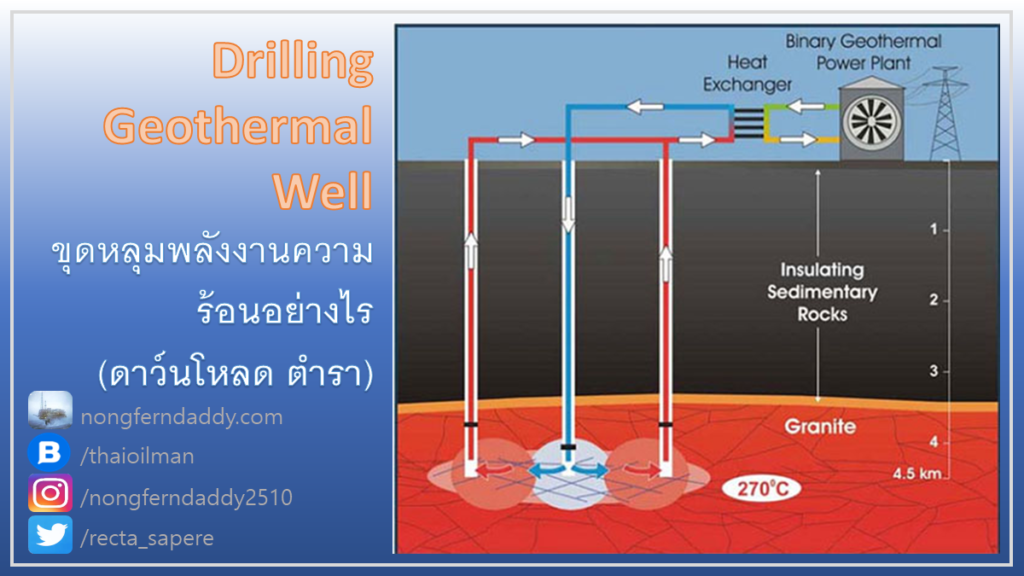
Drilling Geothermal Well ขุดหลุมพลังงานความร้อนอย่างไร ตำรา – เผื่อมีใครสนใจเรื่องนี้ครับ การขุดเจาะหลุมพลังงานความร้อน
จะว่าไปโดยหลักการแล้วก็ไม่ต่างกับการขุดหลุมเพื่อสำรวจหาและผลิตปิโตรเลียมเท่าไรนัก มีแตกต่างกันบ้างนิดๆหน่อยๆ ในรายละเอียด และ ความท้าทายเฉพาะงาน
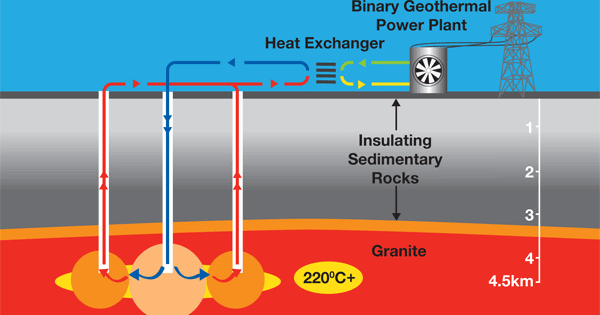

Drilling Geothermal Well
เท่าที่ผมทราบ ความท้าทายหลักๆก็คือเรื่องของอุณหภูมิที่สูงกว่าหลุมปิโตรเลียมมากๆ นอกจากนั้นก็ยังมีเรื่องขนาดของหลุมที่ต้องรองรับปริมาณน้ำ(รวมถึงไอน้ำ)ปริมาณมหาศาล เพราะเราต้องใช้นำเป็นตัวกลางถ่ายเทพลังงานขึ้นมาใช้ เมื่อหลุมต้องรองรับน้ำ ที่ขาดไม่ได้เลยเลยอีกเรื่องก็คือวัสดุที่นำมาทำหลุมจะต้องทนทานสารเคมีและการกัดกร่อน
อ้างอิง … https://petrowiki.org/Geothermal_drilling_and_completion
หิน
โดยมากก็ประมาณหินพวกนี้ครับ ไม่ใช่หินตะกอน (sedimentary rock) แบบหินแหล่งกักเก็บปิโตรเลียม
- Granite
- Granodiorite
- Quartzite
- Greywacke
- Basalt
- Volcanic tuff


ความท้าทายที่สำคัญที่ต่างจากหลุมปิโตรเลียม
- Hot (production intervals from 160°C to above 300°C) – มันก็แหง๋อยู่แล้วครับข้อนี้
- Often hard (240+ MPa compressive strength), abrasive (quartz content above 50%) อันนี้จริง แข็งกว่างานของเราเยอะ แน่นอนว่ารัปทานหัวเจาะหลุมล่ะหลายหัว น่าจะเป็นตลาดที่ดีสำหรับบ.ขายหัวเจ่าะ 🙂
- Highly fractured (fracture apertures of centimetres) – ข้อนี้น่ากลัว เพราะสูญเสียน้ำโคลน (loss circulation) เป็นว่าเล่นเลย ผมได้ยินเพื่อนๆที่เคยขุดหลุมพวกนี้ว่างั้นนะ
- Under-pressured – แปลง่ายๆว่า ความดันของไหลในชั้นหินมันต่ำกว่าความดันปรกติของน้ำนั่นแหละครับ
- Often contain corrosive fluids – หุหุ นี่ก็คงต้องใช้ท่อใช้เหล็กเกรดสูงๆนะ ไปขายท่อกรุดีกว่า 🙂
- Some formation fluids have very high solids content – ขึ้นกับประเภทของเศษหิน ถ้าเป็นตระกูลทราย หรือ Quartzite เหลี่ยมมุมเยอะๆ ก็คงขัดสีปี้ป่นเครื่องไม้เครื่องมือ (ท่อขุด BHA) และ ปั๊มน้ำโคลน แต่โดยทั่วไป ถ้ามี solids content มากๆจะทำให้ Plastic viscosity (PV) ความหนืด ของน้ำโคลนสูงเปลืองพลังงานปั๊ม (ปั๊มอออกแรงเยอะ ความดันสูง อัตราการไหลต่ำ) ถ้าเสียเงินค่าสารเคมี และ ตะแกรงร่อนเอาของแข็งพวกนี้ออก
ปัญหาที่เจอบ่อยๆ
- Rate of penetration and bit life are typically low – แหง๋น้อ ก็หินมันแข็งนิ
- Corrosion is often a problem – นี่ก็พูดไปแล้วแต่ต้น ธรรมชาติมันให้มาแบบนั้น
- Lost circulation is frequent and severe – ก็หินมันมักจะมีรอยร้าวอยู่เป็นธรรมชาติของแหล่งหินความร้อนนี่นา
- These problems are often compounded by high temperature – ปกติไอ้ 3 ข้อข้างบนนั้นก็สาหัสด้วยตัวของมันเองอยู่แล้ว แต่ก็นะ มันมีความร้อนเพิ่มขึ้นมาอีก การแก้ปัญหามันก็ยากขึ้นทวีคูณ
อะ ไตเติ้ล อารัมภบท โฆษณาเรียกน้ำย่อย มาเยอะพอแล้ว ไปโหลดตำรามาอ่านได้ –> Handbook of Best Practices for Geothermal Drilling


อ่านเพิ่มเติม …
Geothermal energy คืออะไร
https://en.wikipedia.org/wiki/Geothermal_energy
Geothermal energy is the thermal energy generated and stored in the Earth. Thermal energy is the energy that determines the temperature of matter. The geothermal energy of the Earth’s crust originates from the original formation of the planet and from radioactive decay of materials (in currently uncertain[1] but possibly roughly equal[2] proportions). The adjective geothermal originates from the Greek roots γῆ (gê), meaning Earth, and θερμός (thermós), meaning hot.
Earth’s internal heat is thermal energy generated from radioactive decay and continual heat loss from Earth’s formation.[3] Temperatures at the core–mantle boundary may reach over 4000 °C (7200 °F).[4] The high temperature and pressure in Earth’s interior cause some rock to melt and solid mantle to behave plastically, resulting in portions of the mantle convecting upward since it is lighter than the surrounding rock. Rock and water is heated in the crust, sometimes up to 370 °C (700 °F).[5]
With water from hot springs, geothermal energy has been used for bathing since Paleolithic times and for space heating since ancient Roman times, but it is now better known for electricity generation. Worldwide, 11,700 megawatts (MW) of geothermal power was available in 2013.[6] An additional 28 gigawatts of direct geothermal heating capacity is installed for district heating, space heating, spas, industrial processes, desalination and agricultural applications as of 2010.[7]
Geothermal power is cost-effective, reliable, sustainable, and environmentally friendly,[8] but has historically been limited to areas near tectonic plate boundaries. Recent technological advances have dramatically expanded the range and size of viable resources, especially for applications such as home heating, opening a potential for widespread exploitation. Geothermal wells release greenhouse gases trapped deep within the Earth, but these emissions are much lower per energy unit than those of fossil fuel.
The Earth’s geothermal resources are theoretically more than adequate to supply humanity’s energy needs, but only a very small fraction may be profitably exploited. Drilling and exploration for deep resources is very expensive. Forecasts for the future of geothermal power depend on assumptions about technology, energy prices, subsidies, plate boundary movement and interest rates. Pilot programs like EWEB’s customer opt in Green Power Program[9] show that customers would be willing to pay a little more for a renewable energy source like geothermal. But as a result of government assisted research and industry experience, the cost of generating geothermal power has decreased by 25% over the 1980s and 1990s.[10] In 2001, geothermal energy costs between two and ten US cents per kWh.[11]